面临第六康波,中国医疗企业如何抓住机会?
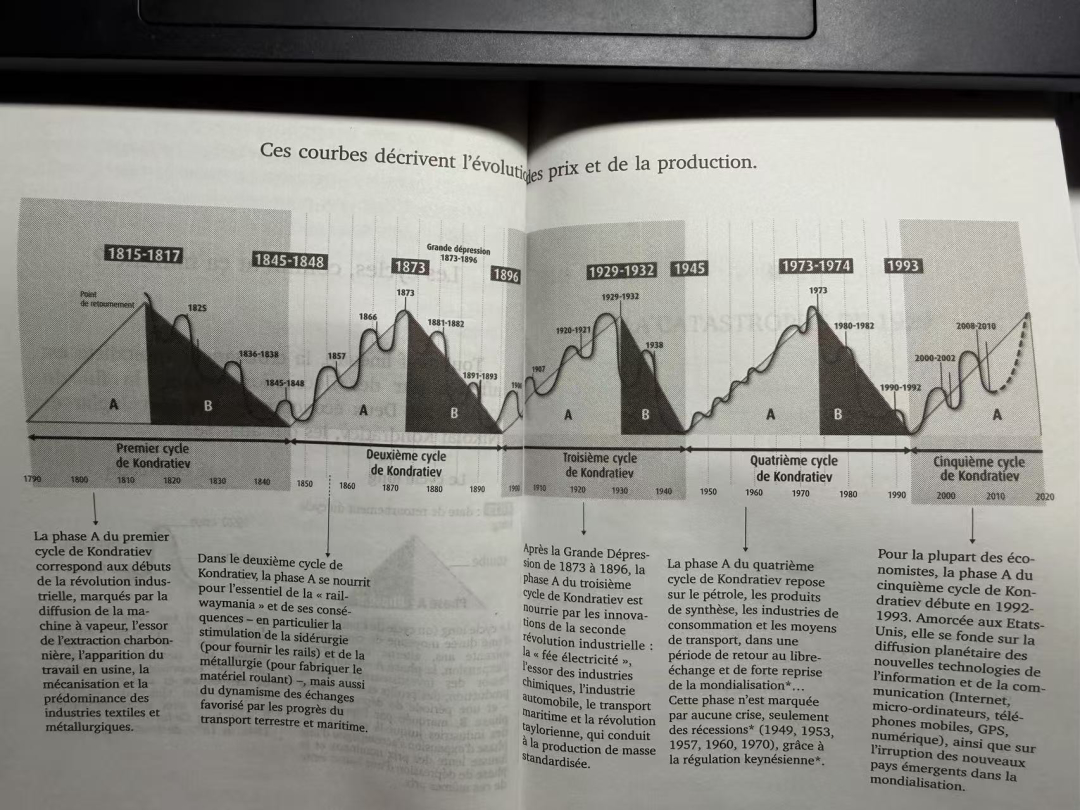
最近重读 Nicolas Baverez 的《Les crises du capitalisme》,书里那张 1790 年到 2020 年的康德拉季耶夫周期(康波)曲线,把我这些年对出海的判断,一下子串起来了。
先说结论:我们正站在第五康波的清算尾声,和第六康波的局部爆发口上。对中国医疗企业来说,这是一轮长达十几年的结构性机会窗口——但只有"有技术壁垒 + 按全球标准做产品"的玩家,才接得住。
一、什么是康波,医疗人为什么该关心
康德拉季耶夫长波,是经济学家康德拉季耶夫发现的一个约 50–60 年的经济长周期。每一轮长波,都由一项"通用目的技术"点燃,并贯穿一整代基础设施与产业的兴衰。Baverez 书里的曲线把过去两百多年拆成五轮:
- 第一康波:蒸汽机与纺织机械化;
- 第二康波:铁路与钢铁;
- 第三康波:第二次工业革命——电力、化学、汽车、石油;
- 第四康波:石化、消费品与交通;
- 第五康波:从 1991–1993 年的美国起步,由信息技术、互联网、微机、移动通信、GPS 驱动。
我们此刻处在第五康波的末端——IT 红利见顶、边际效用递减;而第六康波的火种,已经在 AI 基础设施里点燃。
二、我的三阶段判断(高登哥观察)
把康波和眼下的技术节奏叠在一起,我给自己画了三张时间表:
阶段一:破局与分化期(当前 — 未来 3–5 年)。 第五康波彻底清算,第六康波局部爆发。传统产业、缺乏技术壁垒的领域继续承压,就业市场经历结构性重组;但以 AI 基础设施、GPU/专有芯片、新型能源(核能、电网改造)为代表的固定资产投资(朱格拉周期)会持续保持高强度。
阶段二:应用扩散与全面繁荣期(未来 5–15 年)。 第六康波长波正式进入 A 段(繁荣期)。AI 不再局限于大模型和算力争夺,而是深度渗透实体经济——具身智能(机器人)、生物医药(AI 制药与精密医疗)、自动驾驶、智能制造全面成熟。全球经济摆脱低迷,进入新一轮约 20 年的高增长,设备更新与自动化升级推动强劲的朱格拉上升周期。
阶段三:成熟与新边际递减期(2040 年代以后)。 第六康波鼎盛后过渡成熟,AI 与新技术的渗透率接近饱和,竞争格局固化,生产力飞跃的边际红利再次放缓,等待第七次技术革命的萌芽。
三、战争改不了周期方向(高登哥观察)
有个反直觉的观察值得记下来:战争和经济周期,没有直接相关。
第一次世界大战 1914–1918,正处在第三次康波的上行期,当时的化学、汽车工业蓬勃发展,并没有被战争打断;第二次世界大战 1939–1945 处在下行周期,即便美国大发战争横财,全球依然陷入衰退。
结论很清楚:经济周期由技术发明和生产率提高决定,而不是由地缘冲突决定。 眼下,AI 正是把全球经济推入第六康波上升期那股真正的结构性力量。
这对出海心态很重要:别被"地缘风险会毁掉出口"的宿命论带偏——周期方向不由它定;但摩擦层(合规、本地化、审查)是真实存在的,必须正面处理,不能当不存在。
四、落到中国医疗企业:四个抓手
说了大半天的宏观,回到你最关心的——中国医疗企业怎么抓住这轮机会?
- 护城河 = 技术壁垒 + 全球合规,不是成本。 在"破局与分化期",没技术壁垒、只靠成本的企业,会同时被国内和海外两头挤压。能跑出来的,是把技术壁垒和全球合规(CE / MDR / IVDR)绑在一起做的玩家。成本从来不是医疗出海的护城河,合规信用才是。
- AI 制药与精密医疗,是中欧最天然的结合点。 第六康波的 A 段主航道,正是 AI 深度渗透生物医药与精密医疗。欧盟有最严格也最被全球认可的监管体系,中国有工程化与制造规模——这两样加在一起,落在的恰好是 AI 制药、精密诊断(IVDR)、手术机器人这类高壁垒赛道。这是中国医疗企业"换道超车"最可能的窗口,而不是在低端耗材里继续内卷。
- 地缘摩擦是"摩擦层",不是"决定层"。 前面说过,周期方向不由地缘冲突定。但美国那套隐性门槛——CFIUS 审查、数据安全、对"中国制造"的额外审视——是实打实的摩擦。应对办法不是回避,而是从 Day 1 就按欧盟 / 全球标准设计产品,用合规信用把摩擦降到最低。
- 现在就按欧盟标准做,别等。 我一贯的观点:现在不来欧盟,也必须按欧盟标准做产品。因为 CE 不只是欧盟门票,它是全球通行证——WHO、UNICEF、Global Fund 都认可 CE,一次质量投入能撬动新兴市场。别做"一次性大推"指望立刻起飞,先做降低门槛的小动作:先验证一个细分需求,先拿一个国家的准入,先服务好一个灯塔客户。
五、写在最后
第六康波不是口号,是未来十几年真实的生产率曲线。中国医疗企业能不能抓住,不取决于你喊不喊"出海",而取决于你的产品,站在第几康波、哪一段。
The Sixth Kondratiev Wave: What It Means for Chinese Healthcare
Recently I re-read Nicolas Baverez's "Les crises du capitalisme". The Kondratiev curve from 1790 to 2020 in that book suddenly connected all my years of judgements about going global.
The conclusion first: we stand at the tail of the Fifth Kondratiev wave's liquidation and the breakout point of the Sixth. For Chinese healthcare companies, this is a structural opportunity window lasting over a decade — but only players with technological moats and products built to global standards can catch it.
1. What is the Kondratiev wave, and why should healthcare people care
The Kondratiev long wave is an economic long cycle of about 50–60 years discovered by economist Kondratiev. Each wave is ignited by a "general-purpose technology" and runs through a whole generation of infrastructure and industry rise and fall. Baverez's curve splits the past 200+ years into five waves:
- First wave: steam engine and textile mechanisation;
- Second wave: railways and steel;
- Third wave: the Second Industrial Revolution — electricity, chemicals, automobiles, oil;
- Fourth wave: petrochemicals, consumer goods and transport;
- Fifth wave: starting in the US in 1991–1993, driven by IT, the internet, microcomputers, mobile communications, GPS.
We are at the end of the Fifth wave — IT dividends peaking, marginal utility diminishing; while the spark of the Sixth wave has already been lit in AI infrastructure.
2. My three-stage judgement (Gordon's observation)
Overlaying the Kondratiev wave with today's tech rhythm, I drew myself three timelines:
Stage 1: Breakout and divergence (now — next 3–5 years). The Fifth wave is fully liquidated; the Sixth breaks out locally. Traditional industries and areas lacking tech moats remain under pressure; the job market undergoes structural reshuffling; but fixed-asset investment (Juglar cycle) represented by AI infrastructure, GPUs/proprietary chips, and new energy (nuclear, grid upgrades) stays at high intensity.
Stage 2: Application diffusion and full prosperity (next 5–15 years). The Sixth wave formally enters its Phase A (boom). AI is no longer limited to large models and compute competition, but deeply penetrates the real economy — embodied intelligence (robotics), biomedicine (AI pharma and precision medicine), autonomous driving, smart manufacturing all mature. The global economy shakes off the downturn and enters a new ~20-year high-growth phase; equipment renewal and automation upgrades drive a strong Juglar up-cycle.
Stage 3: Maturity and new diminishing returns (after the 2040s). After the Sixth wave's peak, it transitions to maturity; AI and new-tech penetration approaches saturation, competition solidifies, the marginal dividend of productivity leaps slows again, awaiting the sprout of the Seventh tech revolution.
3. War cannot change the direction of cycles (Gordon's observation)
One counter-intuitive observation is worth noting: war and economic cycles have no direct correlation.
WWI (1914–1918) was in the up-phase of the Third wave; the chemical and automobile industries boomed and were not interrupted by the war. WWII (1939–1945) was in a down-cycle; even though the US made a war fortune, the world still fell into recession.
The conclusion is clear: economic cycles are determined by technological invention and productivity gains, not by geopolitical conflict. Right now, AI is the real structural force pushing the global economy into the Sixth wave's up-phase.
This matters for the going-global mindset: don't be led astray by the fatalism that "geopolitical risk will destroy exports" — the cycle direction is not set by it; but the friction layer (compliance, localisation, scrutiny) is real and must be addressed head-on, not ignored.
4. For Chinese healthcare companies: four levers
After talking macro for a while, back to what you care about most — how can Chinese healthcare companies catch this round of opportunity?
- Moat = tech moat + global compliance, not cost. In the "breakout and divergence" phase, companies with no tech moat and only cost advantages get squeezed from both domestic and overseas. Those that win tie tech moat and global compliance (CE / MDR / IVDR) together. Cost was never the moat for healthcare going global; compliance credibility is.
- AI pharma and precision medicine are the most natural China–Europe combination. The Sixth wave's Phase A main channel is exactly AI deeply penetrating biomedicine and precision medicine. The EU has the strictest and most globally recognised regulatory system; China has engineering and manufacturing scale — together they land precisely on high-moat tracks like AI pharma, precision diagnostics (IVDR), and surgical robots. This is the most likely window for Chinese healthcare companies to "change lanes and overtake", rather than continuing to churn in low-end consumables.
- Geopolitical friction is a "friction layer", not a "decision layer". As said, cycle direction is not set by geopolitical conflict. But America's implicit barriers — CFIUS review, data security, extra scrutiny of "Made in China" — are real friction. The response is not avoidance, but to design products to EU/global standards from Day 1, using compliance credibility to minimise friction.
- Build to EU standards now, don't wait. My consistent view: even if you don't come to the EU now, you must build products to EU standards. Because CE is not just the EU ticket, it is a global passport — WHO, UNICEF, the Global Fund all recognise CE; one quality investment unlocks emerging markets. Don't do a "one-time big push" expecting immediate takeoff; first make small moves that lower the threshold: first validate a niche demand, first get one country's access, first serve one lighthouse customer.
5. In closing
The Sixth Kondratiev wave is not a slogan; it is the real productivity curve for the next decade-plus. Whether Chinese healthcare companies can catch it does not depend on whether you shout "going global", but on where your product stands on the wave curve.